
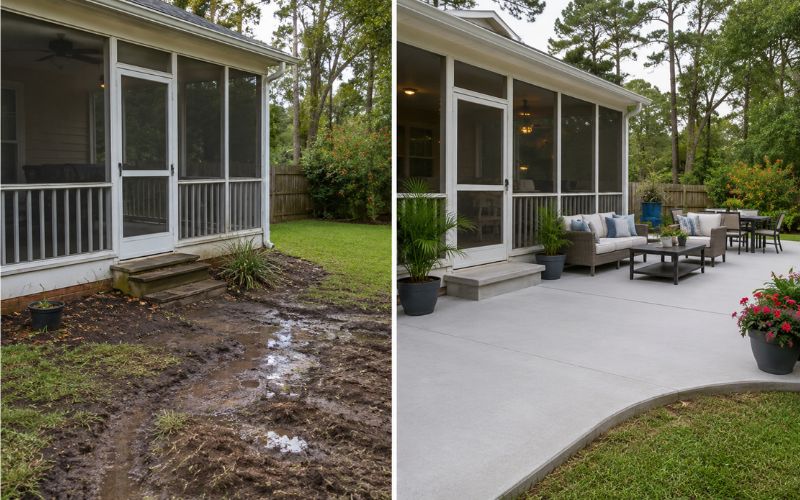
Have you ever stepped from your screened porch onto a muddy, uneven, or uncomfortable backyard area? Concrete Patios for Screened Porch Transitions in Suffolk VA can solve that common problem with a smooth connection. A planned concrete surface makes outdoor movement safer and keeps dirt away from the porch. In addition, it creates useful space for relaxing, dining, and entertaining. This guide explains how proper design, drainage, preparation, and finishes can improve your outdoor living area.
How Concrete Patios for Screened Porch Transitions in Suffolk VA Improve Outdoor Living
Concrete Patios for Screened Porch Transitions in Suffolk VA connect the comfort of a screened porch with the open backyard. Without a proper surface, homeowners may face mud, uneven steps, poor drainage, and limited outdoor space. However, a concrete patio creates a clean and stable area for daily use. It also makes the screened porch feel larger because both spaces work together. Therefore, the right patio design can improve comfort, safety, function, and property appeal.
Why a Smooth Porch Transition Matters
A screened porch provides shade, fresh air, and protection from insects. However, the area outside the porch may feel separate or difficult to access. A concrete patio creates a smooth transition between the porch and the yard. As a result, family members can move between both spaces with greater comfort. The patio also reduces contact with mud, loose soil, and wet grass. Moreover, a stable surface helps children, guests, and older adults walk more safely around the backyard.
Planning the Correct Patio Height and Slope
Proper patio planning starts with the height of the screened porch entrance. The concrete should meet the doorway without creating a difficult or unsafe step. At the same time, the patio needs a slight slope away from the home. This slope helps rainwater move toward the yard instead of the porch. Otherwise, standing water may affect wood, trim, screens, or nearby soil. Therefore, careful measurements help create a smooth transition while protecting the home from moisture problems.
Choosing a Patio Size for Daily Use
The ideal patio size depends on how each family plans to use the space. Some homeowners only need room for several chairs and a small table. However, others may want space for dining, grilling, entertaining, or outdoor storage. Therefore, the design should consider furniture size, walking paths, and the number of regular users. A well-sized patio prevents crowded layouts and supports comfortable movement. In addition, it creates a clear path between the screened porch and the backyard.
Selecting the Best Concrete Finish
The concrete finish affects the patio’s appearance, texture, safety, and maintenance needs. A broom finish provides a simple surface with useful traction during wet weather. Meanwhile, stamped concrete can create the appearance of brick, stone, or pavers. Colored concrete may also complement the porch, siding, brick, or exterior trim. However, decorative finishes often require more maintenance than standard concrete. Therefore, homeowners should choose a finish that balances style, budget, safety, and regular outdoor use.
Matching the Patio With the Screened Porch
A successful patio should look like a planned extension of the screened porch. Therefore, the shape, color, and edges should complement the home’s existing design. Rectangular patios often create a clean and organized appearance. However, curved edges may work better near gardens or open lawn areas. Decorative borders can also connect the patio with porch columns, flooring, or trim. In addition, wide steps, planters, lighting, and walkways can make the entire outdoor area feel complete and welcoming.
Improving Drainage Around the Porch
Drainage plays an important role in every concrete patio project. Rainwater should move away from the porch, foundation, and surrounding structures. Otherwise, water may collect near the entrance or create muddy areas around the patio edges. A contractor should study the yard slope, soil, roof drainage, and nearby low areas. In some cases, a drain may help control water movement. Therefore, proper drainage planning can prevent standing water, slippery surfaces, soil erosion, and moisture damage near the porch.
Preparing the Ground Before Concrete Installation
A strong concrete patio needs a firm and carefully prepared base. First, the contractor removes grass, roots, loose soil, and other weak materials. Next, the crew levels and compacts the ground to reduce future movement. A gravel base may also support drainage and improve stability. Forms then create the correct patio shape and height. In addition, reinforcement may help control cracking. Therefore, proper preparation supports a stronger surface and helps the patio handle weather, furniture, and daily activity.
Creating Safe Steps and Walking Areas
The transition may require steps when the screened porch sits above the yard. These steps should provide enough width and depth for comfortable movement. In addition, every step should maintain a consistent height to reduce tripping risks. The patio should also offer a clear walking path around furniture, grills, and planters. Therefore, homeowners should consider how people will enter, exit, and cross the space. Thoughtful planning creates safer movement while keeping the outdoor layout open and organized.
Maintaining the Finished Concrete Patio
Concrete patios require less maintenance than many other outdoor surfaces. However, regular care helps protect their appearance and strength. Homeowners should remove leaves, dirt, and stains before they remain on the surface. Gentle washing can also prevent buildup near porch entrances and furniture areas. In addition, homeowners should inspect joints, edges, and small cracks during the year. Decorative concrete may need sealing for added protection. Therefore, simple maintenance can help the patio stay attractive and useful for years.
Adding Comfort and Long-Term Home Value
A concrete patio adds outdoor space without requiring a complete home addition. Families can use the area for meals, conversations, celebrations, or quiet evenings. In addition, the patio makes the screened porch feel more connected to the backyard. Future buyers may also appreciate a clean and functional outdoor transition. Most importantly, the project solves several common problems at once. It can improve access, control mud, support drainage, and create a more enjoyable space for everyday outdoor living.
Create a Better Screened Porch Transition
A well-built concrete patio can make your screened porch safer, cleaner, and more enjoyable. It also creates a natural connection between your home and backyard. Therefore, professional planning can improve drainage, comfort, appearance, and lasting value. Contact our team today to discuss your patio ideas. Schedule your free estimate and start creating a smooth outdoor transition for your Suffolk, Virginia, home.



No comment