Many homeowners dream about a patio that looks beautiful and stays strong for many years. However, that result depends on much more than a smooth finish. Concrete Patio Thickness & Reinforcement: What’s “Done Right” for Long-Term Strength is the key question behind a lasting installation. I have seen patios crack too early because the base, depth, or reinforcement was not correct. In this guide, you will learn what truly supports long-term strength and why each step matters.
Why Proper Concrete Patio Thickness & Reinforcement Matter
A patio should do more than improve curb appeal. It should also handle daily use, weather changes, and ground movement without failing too soon. That is why Concrete Patio Thickness & Reinforcement: What’s “Done Right” for Long-Term Strength matters so much for homeowners. The right thickness, proper reinforcement, and solid preparation all work together. When these parts are done correctly, the patio performs better, lasts longer, and gives homeowners more confidence in their investment.
Why Patio Thickness Matters for Long-Term Durability
Concrete thickness is one of the most important parts of a strong patio. In most homes, four inches is the common standard for residential patios. However, that does not mean every project should use the same depth. A patio that supports heavy furniture, grills, or frequent traffic may need more thickness. When the slab is too thin, it becomes more likely to crack under stress. Because of that, correct depth helps the patio stay more stable over time.
Thickness also affects how the slab responds to changes below the surface. Soil can shift, settle, or expand after rain and temperature changes. When that happens, a properly sized slab has a better chance of staying intact. On the other hand, thin concrete often shows damage faster because it cannot spread pressure as well. Therefore, proper thickness is not just a technical detail. It is one of the main reasons a patio can remain strong and useful for years.
The Role of Reinforcement in Concrete Patios
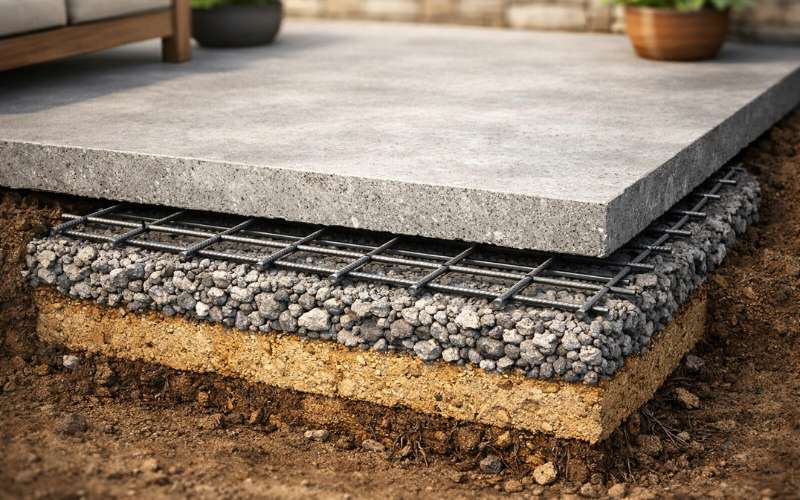
Concrete is strong, but it still needs support to manage stress well. That is where reinforcement becomes important. Materials such as rebar, wire mesh, and fiber additives help the slab hold together when pressure builds over time. Without reinforcement, a patio may still look fine at first. However, it can become more vulnerable to cracking as the ground shifts or the weight on the surface increases. Reinforcement adds another level of strength that helps protect the slab.
It is also important to understand that reinforcement only works when it is installed correctly. Rebar or mesh placed too low in the slab will not provide the support it should. Because of this, experienced installers use proper spacing and supports during the pour. Fiber reinforcement can also help reduce minor surface cracks, especially in residential patios. In the end, reinforcement does not replace good thickness or site preparation. Instead, it works together with them to create a stronger result.
Proper Base Preparation Before Pouring Concrete
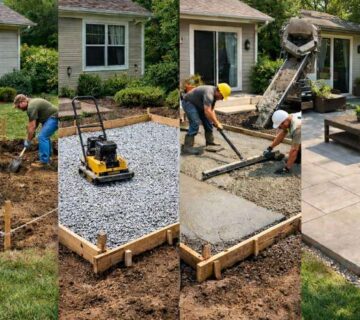
A strong patio always starts below the concrete. Even the best mix will struggle if the ground underneath is not stable. That is why base preparation is such an important part of the process. Contractors should remove weak soil, add a gravel or crushed stone base, and compact that material well. This creates a more stable platform for the slab. As a result, the patio is less likely to sink, shift, or crack after installation.
Base preparation also improves drainage, which helps protect the slab over time. Water that stays trapped under concrete can weaken support and lead to movement. A compacted gravel base helps water move away more effectively while reducing the chance of soft spots. In addition, checking the grade before pouring helps create a more even installation. Homeowners often focus on the finished surface, but long-term performance depends heavily on what happens during this early stage of the project.
Control Joints Help Prevent Large Cracks
Concrete naturally shrinks as it cures, and that process can create stress in the slab. Because of this, control joints are used to guide where cracking happens. These joints do not stop all cracks completely, but they help prevent random and messy cracking across the patio. Instead, they create planned areas where stress can release in a cleaner way. That improves both appearance and performance, especially on larger patio surfaces.
Control joints should be placed with care because spacing matters. If they are too far apart, the slab may crack in areas that were not planned. When installed correctly, they help the patio look more organized and better maintained over time. In addition, they reduce the chance of wide cracks that become more visible later. Many homeowners do not notice control joints at first, but they play a very important role in long-term strength and surface control.
Drainage and Slope Protect the Patio Structure
Water is one of the most common causes of patio problems. If rainwater stays on the slab or moves toward the house, damage can develop over time. That is why every patio should have the correct slope. A gentle slope helps water run away from the home and off the concrete surface. This protects the slab, reduces water buildup, and lowers the risk of moisture problems around the patio area.
Good drainage also protects the base under the slab. When water sits too long, the soil below may soften or shift. As a result, the patio can become uneven or develop cracks. Proper slope and grading help prevent that issue before it starts. In addition, drainage improves safety because it reduces slippery standing water after rain. A patio should be both durable and functional, and smart water control plays a major part in achieving both goals.
Common Mistakes That Lead to Weak Patios
Many patio failures happen because basic steps were skipped during installation. Some slabs are poured too thin, while others are placed on poorly prepared ground. In other cases, reinforcement is missing or control joints are not spaced correctly. These mistakes may not seem obvious on the first day. However, they often show up later through cracks, low spots, and surface movement. That is why quality installation matters from the beginning.
Homeowners who understand Concrete Patio Thickness & Reinforcement: What’s “Done Right” for Long-Term Strength are better prepared to spot good workmanship. They can ask better questions and make smarter decisions before the project begins. Choosing a contractor should never be based only on price. It should also depend on the process, materials, and attention to detail. When corners are cut, repairs often cost more later. A well-built patio starts with doing the basics the right way.
Build Your Patio the Right Way from the Start
A durable patio depends on more than appearance alone. It needs the right thickness, proper reinforcement, a stable base, and effective drainage. When those parts work together, the result is stronger and more reliable for long-term use. If you want a patio built with care and done right from the start, our team is ready to help. Contact us today and let’s plan a concrete patio designed for lasting strength.


No comment