
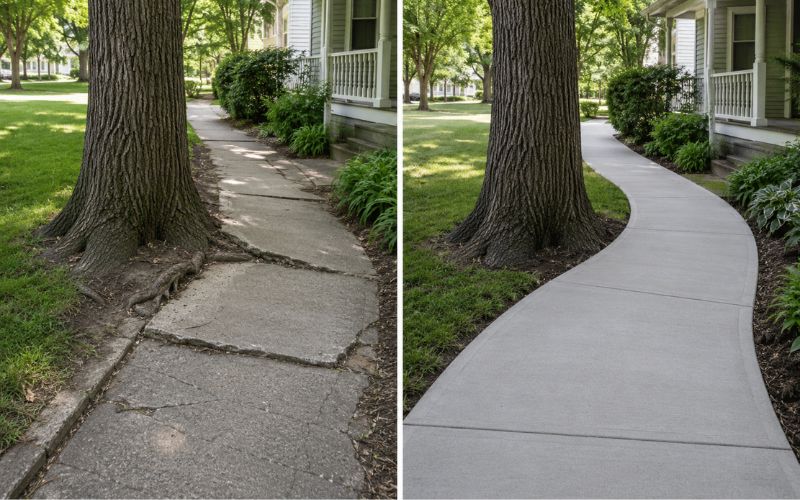
Have you noticed sidewalks cracking, rising, or becoming uneven around large trees? Concrete Sidewalks Around Trees Without Future Lifting in Norfolk VA require careful planning before any concrete gets poured. Tree roots continue growing for years, so poor placement can create serious problems later. However, contractors can reduce future lifting with proper spacing, strong base preparation, good drainage, and smart walkway design. This guide explains how professional planning can protect your sidewalk while allowing nearby trees to grow safely.
How to Build Concrete Sidewalks Around Trees Without Future Lifting in Norfolk, VA
Building Concrete Sidewalks Around Trees Without Future Lifting in Norfolk VA involves much more than placing concrete beside an existing tree. Roots can slowly change the ground beneath a sidewalk, while moisture can weaken nearby soil. Therefore, contractors must study the entire area before construction begins. When they combine correct spacing, drainage, base preparation, and concrete placement, homeowners receive a safer walkway. Moreover, careful planning can reduce future cracks, uneven surfaces, and costly repairs.
Why Tree Roots Can Lift Concrete Sidewalks
Tree roots naturally spread through the soil while searching for water, air, and nutrients. As trees mature, some roots grow closer to the ground surface and may reach areas beneath sidewalks. Over time, these roots can push against concrete and cause sections to rise. However, root growth is not the only cause of sidewalk movement. Loose soil, poor drainage, and weak base preparation can also create uneven surfaces. Therefore, contractors should consider several possible causes before choosing a solution.
Start With a Professional Site Evaluation
A detailed site evaluation helps contractors understand what lies beneath and around the planned sidewalk. First, they should inspect visible roots, existing cracks, tree size, and available walking space. They should also review soil conditions and drainage patterns before removing old concrete. In addition, the contractor can decide whether the sidewalk should follow its current path or move slightly away from major roots. Therefore, a careful inspection can prevent unnecessary tree damage and reduce the risk of future concrete problems.
Give Tree Roots Enough Space to Grow
Placing concrete too close to a mature tree can create problems as the trunk and root system continue expanding. Instead, contractors should leave reasonable space between the tree and sidewalk whenever the property allows it. A small change in the walkway path can sometimes provide enough room for future root growth. Moreover, avoiding major roots helps protect the tree during construction. Because every tree grows differently, contractors should study the site before deciding where the concrete edge should begin.
Build a Strong and Stable Sidewalk Base
A concrete sidewalk depends heavily on the material beneath the slab. Even strong concrete can move when workers place it over loose, wet, or poorly prepared soil. Therefore, contractors should remove weak material and create a stable base before pouring concrete. They should compact the base properly so it supports the sidewalk evenly. In addition, correct grading helps water move away from the walkway. As a result, good base preparation can reduce settling, cracking, and other problems caused by soil movement.
Use the Right Concrete Thickness and Joint Placement
Proper concrete thickness can improve sidewalk strength and help the surface handle normal daily use. However, thickness alone cannot solve problems caused by poor soil or growing roots. Contractors should combine suitable concrete depth with a prepared base and correctly placed control joints. These joints help manage the natural movement that happens as concrete expands and contracts. Moreover, thoughtful joint placement can guide minor cracking into planned areas. Therefore, the full installation process matters more than focusing on one construction detail.
Consider Small Design Changes Around Large Trees
A completely straight sidewalk may not always be the best choice near a mature tree. Instead, a slight curve or small route adjustment can provide valuable space between the concrete and major roots. This change can also make the walkway look more natural within the landscape. Furthermore, contractors may create a wider planting area around the tree when space allows. Because each property has different conditions, flexible design choices can help protect both the tree and the new concrete sidewalk.
Protect Existing Tree Roots During Construction
Construction near mature trees requires extra care because digging can damage important roots. Contractors should avoid removing large roots simply to create space for concrete. Instead, they should expose problem areas carefully and adjust the sidewalk when possible. Large roots often support the tree and help it absorb water and nutrients. Therefore, unnecessary cutting may affect both tree health and stability. By planning excavation carefully, contractors can protect the landscape while still preparing the area for a strong and reliable sidewalk.
Proper Drainage Helps Prevent Sidewalk Movement
Water can weaken the soil beneath concrete and create conditions that lead to settling or movement. During heavy rain, poorly drained areas may stay wet longer and lose some of their ability to support the sidewalk. Therefore, contractors should study how water moves across the property before construction. Proper grading can direct runoff away from the slab and reduce water buildup. In addition, nearby gutters or downspouts may need attention. Good drainage supports both the concrete base and the soil surrounding the tree.
Regular Maintenance Can Extend Sidewalk Life
Even a well-built sidewalk needs occasional attention after installation. Homeowners should check for small cracks, standing water, growing surface roots, or changes in the surrounding soil. When these signs appear early, a contractor can often identify the cause before the problem becomes larger. Moreover, homeowners should keep drainage paths clear and avoid placing heavy materials against the sidewalk edge. Therefore, regular inspections can protect the concrete, improve walking safety, and help homeowners avoid more expensive repairs in the future.
Why Professional Concrete Installation Matters
Concrete work near trees requires several decisions that can affect the sidewalk for many years. Professional contractors evaluate tree roots, drainage, soil, grading, base preparation, concrete placement, and walkway design together. Therefore, they can identify problems before the concrete gets poured. They can also adjust the project when site conditions require a different approach. Moreover, professional planning helps create a sidewalk that looks clean, feels safe, and fits the property while reducing the chance of future lifting.
Build a Safer Concrete Sidewalk Around Your Trees
Planning your sidewalk correctly today can help prevent cracks, lifting, uneven surfaces, and costly repairs later. A professional concrete contractor can review the tree roots, soil, drainage, and walkway layout before construction begins. Therefore, you can make better decisions before pouring concrete. If you are planning a new sidewalk or replacing a damaged one, contact our team today for a free estimate and discuss your concrete sidewalk project in Norfolk, VA.

No comment