
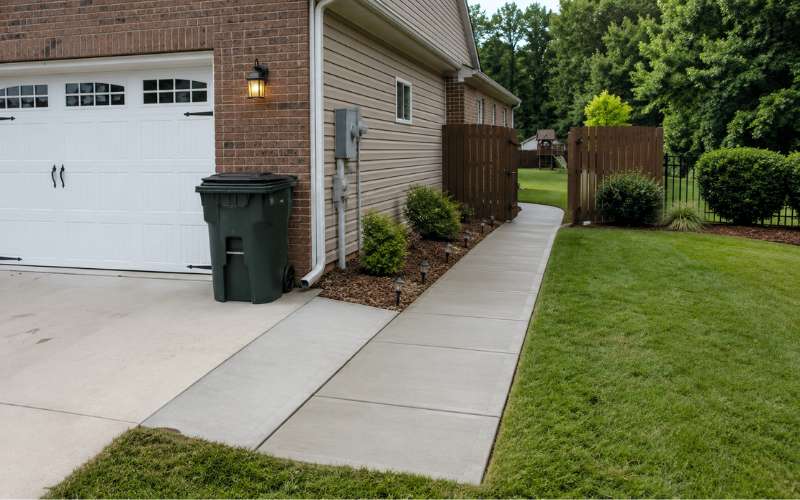
Have you ever struggled to move trash bins, garden tools, or outdoor furniture across wet grass and muddy soil? Concrete Sidewalks for Driveway-to-Backyard Access in Virginia Beach VA provide a clean, safe, and direct route around your property. They can reduce lawn damage, prevent mud from reaching your home, and make daily outdoor tasks easier. Additionally, a well-planned sidewalk creates a more organized layout and improves how your driveway, side yard, and backyard connect.
Benefits of Concrete Sidewalks for Driveway-to-Backyard Access in Virginia Beach VA
A concrete sidewalk between your driveway and backyard can solve several common problems at the same time. Instead of crossing wet grass or uneven soil, you gain a stable surface for walking, carrying supplies, and moving equipment. This improvement becomes especially helpful during rainy weather. Moreover, a defined path helps protect landscaped areas, keeps dirt away from entrances, and gives the exterior of your home a cleaner and more finished appearance.
Easier Access for Everyday Outdoor Activities
Homeowners often use side yards to move trash bins, lawn equipment, groceries, grills, and outdoor furniture. However, these tasks become difficult when the ground feels soft, muddy, or uneven. A concrete sidewalk creates a dependable route that supports both foot traffic and rolling equipment. As a result, you can reach your patio, shed, deck, pool, or backyard entrance with less effort while avoiding unnecessary damage to your grass.
Improved Safety During Rainy Weather
Rain can quickly turn an unpaved side yard into a slippery and unstable area. Carrying heavy items across wet grass may increase the risk of falls, especially near gates, steps, or narrow spaces. A properly finished concrete sidewalk provides better traction and more reliable footing. In addition, the contractor can design the path with a slight slope, which helps direct rainwater away from the home and reduces standing water.
Better Protection for Grass and Landscaping
Repeated foot traffic often creates worn grass, bare soil, and deep tracks along the side of a home. Over time, these areas can collect water and become harder to maintain. A concrete walkway keeps people and equipment on one defined route, which helps protect nearby grass, flower beds, and decorative stone. Furthermore, the sidewalk can create a clean border between walking areas and landscaping, making the yard appear more structured and easier to care for.
Important Planning Before Concrete Installation
Careful planning helps ensure that the sidewalk fits the property and works well for daily use. Before installation begins, the contractor should measure the available space and identify gates, utility lines, air-conditioning units, downspouts, faucets, and property boundaries. The team should also study the slope and existing water flow. Therefore, proper planning can prevent narrow sections, sharp turns, drainage problems, and blocked access to important equipment.
Choosing the Right Sidewalk Width and Layout
The ideal sidewalk width depends on how you plan to use the path. A narrow walkway may support basic foot traffic, while a wider path makes it easier to move bins, wheelbarrows, lawn equipment, and furniture. Straight layouts often use the available space efficiently and may require less concrete. However, gentle curves can create a softer appearance and help the sidewalk move around trees, structures, or utilities without creating difficult turns.
Selecting a Concrete Finish and Design
Standard broom-finished concrete remains a popular option because it provides a clean appearance and useful traction. However, homeowners may also choose colored concrete, decorative borders, exposed aggregate, or stamped details. These options can help the sidewalk match a patio, driveway, or other outdoor feature. Although appearance matters, the finish should remain practical and safe. For that reason, overly smooth surfaces may not work well in areas that receive frequent rain.
Why Base Preparation Matters
A durable concrete sidewalk begins with proper ground preparation. The crew must remove grass, weak soil, roots, and loose material before placing a stable base. Next, they compact the base to reduce movement beneath the concrete. This process helps the sidewalk maintain its shape and strength over time. In addition, secure forms and correctly placed control joints help guide natural movement and reduce the chance of uncontrolled cracking.
Managing Drainage Around the Walkway
Drainage plays a major role in the long-term performance of a concrete sidewalk. The walkway should have enough slope to move water toward a safe drainage area without directing it toward the home’s foundation. Downspouts may also need extensions or adjustments. Otherwise, water may collect along the sidewalk, wash away nearby soil, or create puddles. Therefore, the contractor should review existing drainage patterns before deciding the final height and direction of the path.
Simple Concrete Sidewalk Maintenance
Concrete sidewalks generally require limited maintenance, but regular care can help preserve their appearance. Homeowners should remove leaves, dirt, weeds, and standing water from the surface. Stains should also be cleaned before they become difficult to remove. Decorative concrete may benefit from sealing, depending on the selected finish and exposure. Additionally, checking edges and joints can help identify soil washout, small cracks, or other concerns before they become larger problems.
Increased Function and Property Appeal
A driveway-to-backyard sidewalk improves both function and visual appeal. It creates a clear connection between outdoor spaces and makes the property easier to navigate throughout the year. Furthermore, the walkway can make side yards feel intentional rather than forgotten. When the sidewalk matches nearby concrete and landscaping, it contributes to a more polished exterior. This practical upgrade can reduce mud, support safer movement, protect the lawn, and improve everyday use of the property.
Build a Better Path Around Your Virginia Beach Home
A professionally installed concrete sidewalk can make backyard access safer, cleaner, and more convenient during every season. It can also protect your lawn, improve drainage, and create a more complete exterior design. Our team can help you select the right layout, width, finish, and placement for your property. Contact us today to request a free estimate for Concrete Sidewalks for Driveway-to-Backyard Access in Virginia Beach VA.


No comment