
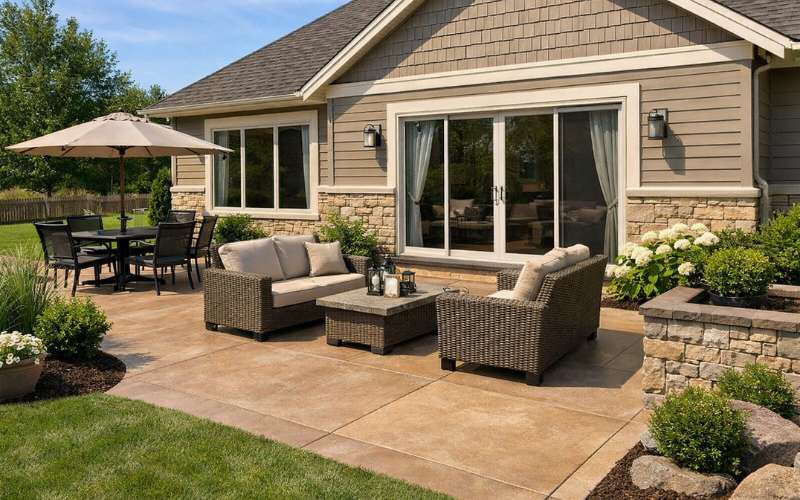
Choosing the right patio color can feel more complex than most homeowners expect, especially when trying to create a balanced outdoor space. Concrete Patio Color Options: How to Match Your Home Exterior becomes essential when you want your patio to blend naturally with your house. I have seen patios that look disconnected simply because the color choice was wrong. However, the right color can unify your entire exterior, enhance curb appeal, and create a warm, inviting environment that feels complete.
How to Choose Concrete Patio Colors That Match Your Home Exterior
Selecting the right patio color is a key step in creating a cohesive outdoor design that feels intentional and visually appealing. Many homeowners feel unsure at first, but understanding Concrete Patio Color Options: How to Match Your Home Exterior makes the process easier. A well-matched patio not only improves the overall look of your home but also increases its value. In addition, it creates a smooth transition between indoor and outdoor areas, making your space feel larger and more connected.
Understand Your Home’s Color Palette
Before choosing a patio color, take time to study your home’s existing color palette. Look closely at your siding, roof, trim, and doors, since these elements already define your home’s style. Your patio should complement these tones rather than compete with them. For example, homes with warm tones usually pair best with earthy patio colors, while cool-toned homes often look better with gray shades. Neutral homes offer more flexibility, allowing you to experiment without losing harmony.
Choose Between Warm and Cool Tones
Color temperature plays a major role in how your patio looks and feels within your outdoor space. Warm tones such as tan, brown, and beige create a cozy and natural atmosphere that works well with traditional designs. Meanwhile, cool tones like gray, charcoal, and slate provide a clean and modern appearance. If your home features brick or wood finishes, warm tones often blend better. However, modern homes typically benefit from cooler shades, which create a more refined and contemporary look.
Popular Concrete Patio Color Options
Today, homeowners have access to a wide range of concrete patio color options that suit different styles and preferences. Light gray is a popular choice for a sleek and modern look, while tan or sand tones create a more natural feel. Charcoal offers a bold and elegant finish, and terracotta adds warmth with a rustic touch. In addition, stamped concrete allows you to replicate materials like stone or brick, adding texture and visual interest to your patio without sacrificing durability.
Consider the Surrounding Landscape
Your patio should always feel like a natural extension of your outdoor environment rather than a separate feature. Therefore, consider your landscaping when choosing a color. Green lawns tend to pair well with neutral patio tones, while colorful gardens benefit from more subtle shades that do not overpower the space. Natural elements such as stone pathways or wooden features also influence your decision. When everything works together, your patio blends seamlessly into the surroundings and enhances the overall aesthetic.
Think About Sunlight and Climate
Lighting and climate can significantly affect how your patio color appears and performs over time. A color that looks perfect in the shade may appear very different under direct sunlight. Therefore, it is important to observe how colors change throughout the day. In warmer climates, lighter tones help reflect heat and keep surfaces cooler. On the other hand, darker shades absorb heat and may feel hotter. Additionally, some colors are better at hiding dirt and wear, which helps maintain a clean look longer.
Test Samples Before Finalizing
Testing color samples before making a final decision is one of the most important steps in the process. Applying small samples in different areas of your patio allows you to see how each color interacts with lighting and surrounding elements. You should observe these samples at different times of the day to notice any changes in appearance. In addition, placing samples near your home’s exterior helps confirm whether the color truly complements your overall design and meets your expectations.
Balance Style and Function
While visual appeal is important, your patio must also be practical and durable for everyday use. Choosing a color that looks good while hiding stains and wear can save you time and maintenance in the long run. Medium tones often provide the best balance between beauty and functionality, especially in high-traffic areas. In addition, textured finishes can improve safety by reducing slipping. When you balance style with function, you create a patio that remains attractive and reliable over time.
Bring Your Patio Design Together with Confidence
Choosing the right patio color does not have to feel overwhelming when you follow a clear and thoughtful approach. By understanding Concrete Patio Color Options: How to Match Your Home Exterior, you can create a space that feels both balanced and inviting. Take the time to evaluate your home, test colors, and consider your environment. If you want expert guidance, contact us today and let our team help you design a patio that enhances your home’s beauty and value.


No comment